Stepping back into the past, in elegant Mantova
My first two years living in Italy, I was in Milan. While there, I explored many towns in the Lombardy region, of which Milan serves as the regional capital.
Since I’ve moved to Rome, I have returned to Milan, but it has been years since I’ve been back to eplore many of Lombardy’s charming towns. So, when my younger son had a track race in Lombardy this past summer, I was pleased to be able to revisit towns like Mantova.
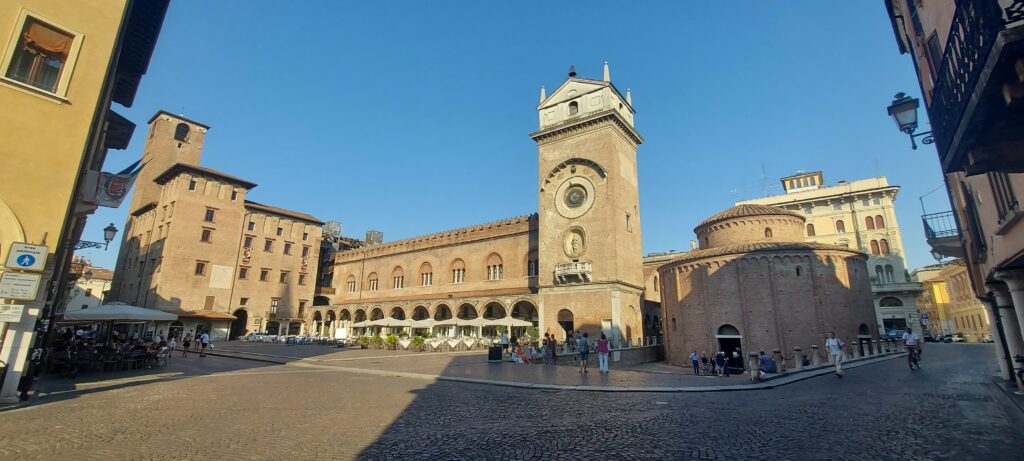
Unfortunately, this was only a quick visit to stretch our legs on our drive up to Brescia, but it was fun to take a passeggiata in this pretty town.
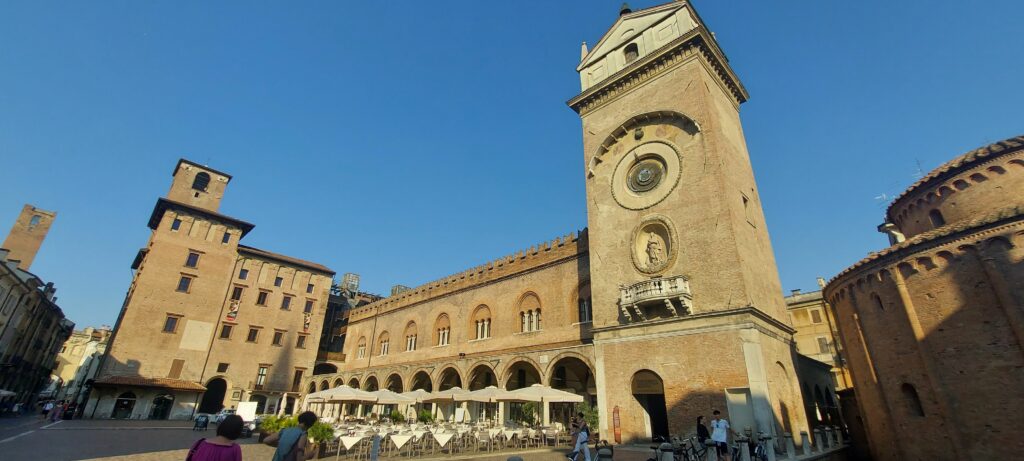
And Mantova is an eminently walkable city. We were escaping the 40+ temperatures in Rome, and, while warm in Mantova, it was light years away from the Roman heat. It’s a little over 50,000 inhabitants, and every piazza is picturesque, befitting a UNESCO Heritage site.
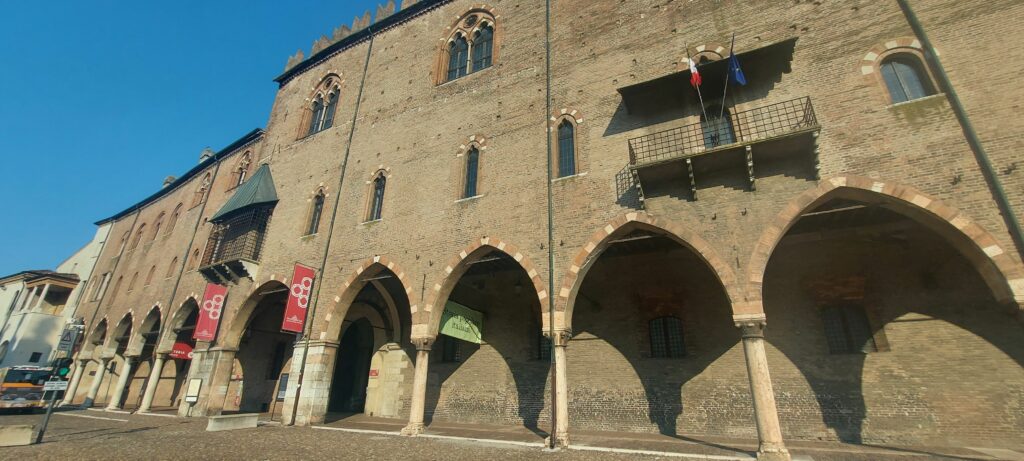
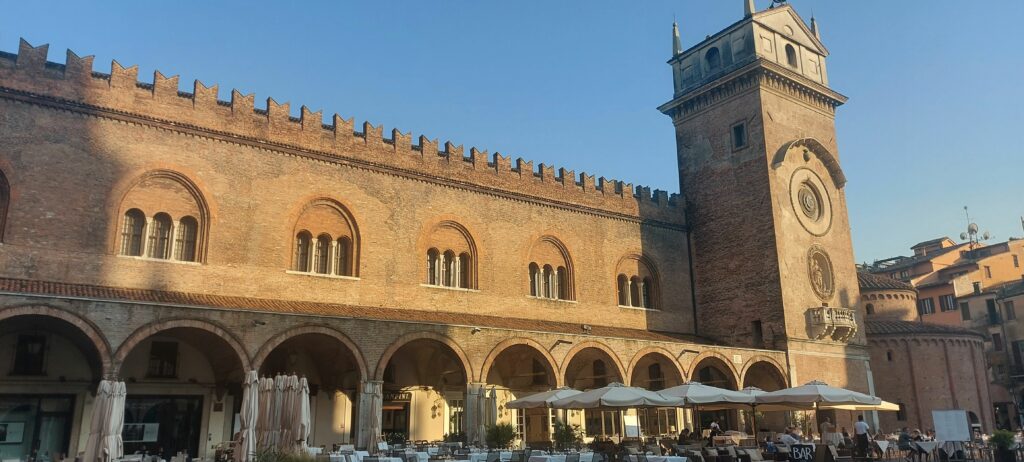
Thirteenth century Palazza ducale
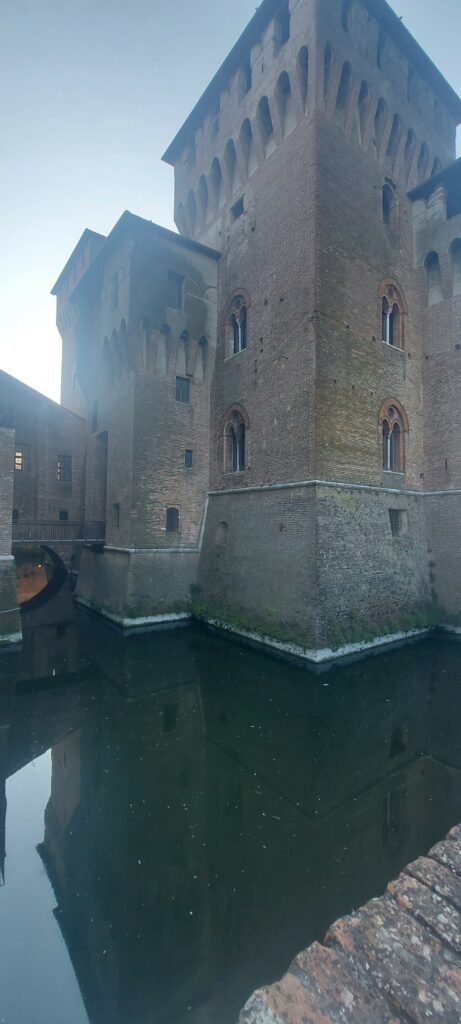
The town was largely created in the twelfth century, with a defensive system that included not only fortified walls, but artificially created lakes to form a defensive water ring, created from the Mincio River.
While built upon earlier Roman settlements, Mantova rose to its maximum splendour under the rule of the Gonzaga (1328-1708) when it was recognized as a seat of cultural, artistic and musical renown. Monteverdi’s opera L’Orfeo was premiered here in 1607. The Roman-era poet Virgil was born nearby.
On this visit, I did not have time to the spectacular Palazzo del Te, that I’ve visited in the past, with its spectacular Mannerist frescoes by a pupil of Raphael, Giulio Romano. That return visit will be for next time.
But our short stop-off was well worth it – such a pleasure to get back for a quick visit in picturesque Mantova, and already looking forward to my next visit in this gracious town.