Recycle! What authors can learn from artists
Last weekend, I was in the Musée des Beaux-Arts in Bordeaux, France.
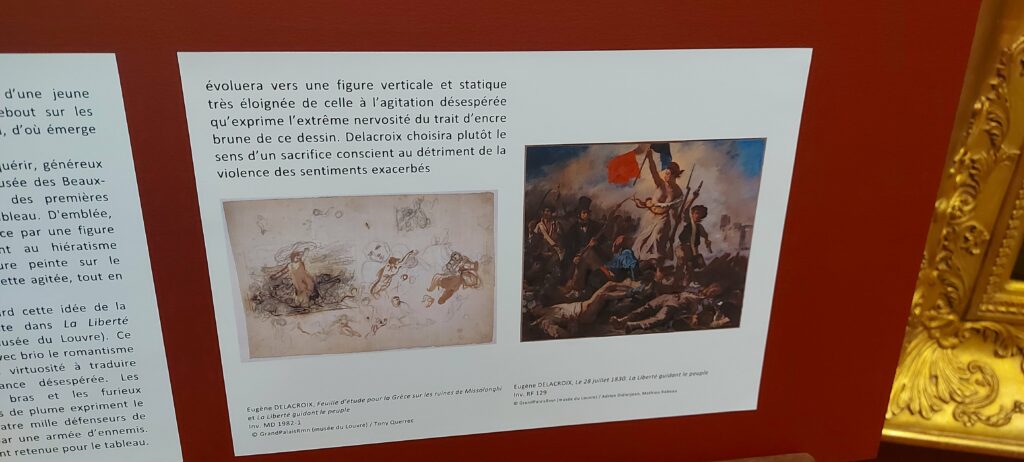
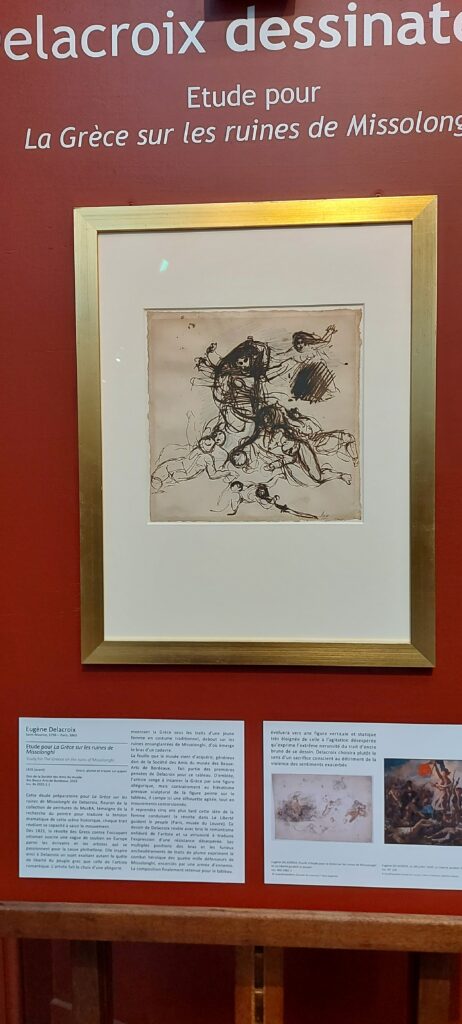
It was a small but interesting collection, with a few artworks by Eugène Delacroix (1798-1863) I’d only seen in textbooks, but never in person. The most well known in the collection was La Grèce sur les ruines de Missolonghi (1826), depicting the attempted Greek uprising against the Ottomans. While the painting itself was beautiful and moving, it was the studies for the work that caught my eye.
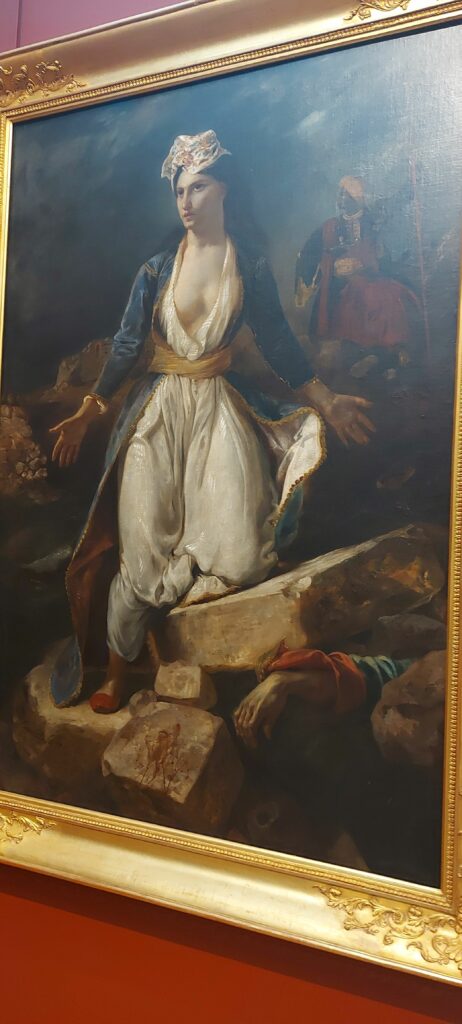
La Grèce sur les ruines de Missolonghi, Delacroix
Initial studies showed that Delacroix had positioned the young woman in traditional clothing standing on the bodies of the dead. Instead, when he painted it, he depicted his figure over destroyed Greek ruins (reflected in the painting’s title), with only the hand of one of the dead visible.
So, apparently, artists also “kill their darlings”.
However, in the spirit that no creative work is ever wasted, Delacroix “recycled” his idea in a later work – one of his most famous.
In his 1830 painting La Liberté guidant le peuple, Delacroix would return to his imagery of a female figure standing on the barricades, over the bodies of those sacrificed by battle during the July 183o Revolution, which ended the reign of King Charles X.
Comparing the studies for Missolonghi with La Liberté makes it clear Delacroix was able to revive his earlier ideas in a later work, where the imagery was much more powerful.
Writers, this technique can be extremely helpful to us. While it can be painful to cut passages or entire pages we carefully crafted, that writing could be “recycled” and repurposed in a future work.